

Do you have knowledge, skills, or creative talents that you would love to share with the world? Whether you are a schoolteacher, private tutor, artist, fitness instructor, professional coach, or content creator, your expertise can become the foundation of an online business.
Today, you no longer need to depend entirely on physical classrooms, local students, or third-party learning platforms to share what you know. You can build your own website, publish educational content, offer online courses, and charge learners for accessing your knowledge.
The best part? You can create a learning platform under your own brand, designed around your teaching style, audience, and business goals.
In this guide, we will explore how to create an online course website, what features you need, and how the SocialEngine Courses – Learning Management System (LMS) Plugin can help you turn your expertise into an online learning business.
Why Create Your Own Online Course Website?
Many professionals already share their knowledge through social media, video platforms, online marketplaces, or live classes. These channels can be useful for building an audience, but having your own course website gives you another way to present your content and generate revenue.
Here are some important reasons to consider launching your own e-learning website.
Build Your Own Brand
Your knowledge and teaching style are part of your professional identity. A dedicated website allows you to present your courses, introduce yourself to potential students, and build a recognizable brand.
For example, a mathematics teacher could create a website offering online mathematics classes, while an artist could build a learning community for painting, drawing, and other creative skills.
Sell Courses Online
You can offer free introductory courses to attract learners and paid courses for people who want more comprehensive training.
Depending on your business model, you might sell individual courses, offer discounted packages, or introduce new courses as your audience grows.
Reach Learners Beyond Your Local Area
A physical classroom limits you to students who can attend in person. An online course website can make your lessons accessible to learners in different cities and countries, subject to your content, payment, and business arrangements.
Organize Your Knowledge into Structured Lessons
Instead of sharing information through disconnected posts or messages, you can organize your teaching materials into courses, lectures, and assessments.
This makes it easier for learners to understand what they are purchasing and follow a structured learning experience.
Create an Additional Revenue Stream
Your expertise can become a product that people pay to access. You can develop courses around your professional skills, creative abilities, or specialized knowledge and make them available through your website.
Although building a successful course business requires quality content, marketing, and learner trust, a dedicated platform gives you a foundation on which to grow.

Who Can Create an Online Course Website?
You do not need to be a traditional teacher to launch an e-learning platform. Anyone with valuable knowledge or a teachable skill can explore this opportunity.
Teachers and School Educators
Create online lessons for school subjects, exam preparation, mathematics, science, languages, or other academic topics. You can organize your teaching material by subject or learning level.
Private Tutors and Coaching Professionals
If you already provide private tuition or coaching, an online platform can help you extend your services beyond individual sessions. Publish recorded lessons, create practice tests, and offer courses to more learners.
Artists and Creative Professionals
Are you a painter, musician, photographer, craftsperson, or designer? Teach your skills through structured video tutorials and written lessons.
For example, an artist could offer beginner painting classes, while a photographer could create courses about lighting, composition, and photo editing.
Fitness Trainers, Yoga Instructors, and Wellness Educators
Create educational programs covering exercise techniques, yoga practices, or other areas within your professional expertise. Structure your content into lessons that learners can access online.
Business Consultants and Industry Experts
Share your professional knowledge through courses on entrepreneurship, digital marketing, leadership, accounting, sales, or industry-specific skills.
Content Creators and Influencers
If you already create educational content, a dedicated course website can provide a more structured way to offer premium learning material to your audience.
The common opportunity is simple: turn what you know into organized learning experiences that people can access through your own website.

What Features Do You Need to Build an Online Course Website?
A successful e-learning website needs more than a page displaying videos. It should help you organize courses, present lessons, manage learners, and support paid access.
Here are some of the important features to consider.
Online Classrooms
Organize your learning offerings into classrooms based on subjects, skills, categories, or areas of expertise.
For example, a language educator could create separate classrooms for spoken English, grammar, and business communication.
Classrooms can help visitors discover relevant learning opportunities and understand the focus of your educational platform.
Free and Paid Courses
Not every course needs to be paid. Free courses can introduce learners to your teaching style, while premium courses can offer more comprehensive content.
You can use free learning material to attract potential students and provide paid courses for those who want to explore a subject in greater depth.
Video and Text-Based Lectures
Different subjects require different teaching methods. Some lessons work best as video tutorials, while others are easier to understand through written explanations or documents.
A flexible course platform should allow you to organize lessons in formats suitable for your subject and audience.
Tests and Assessments
Assessments help learners check their understanding of a topic.
Depending on your course format, you may want to create multiple-choice questions, true-or-false questions, or other supported question types. Test results and pass-or-fail notifications can make the learning experience more structured.
Course Pricing and Discounts
Your website should make it possible to set course prices and offer discounts where appropriate.
Promotional pricing can help you introduce a new course, run special offers, or encourage learners to explore your other educational offerings.
Secure Online Payments
If you intend to sell courses, payment integration is essential. Supported payment gateways can allow learners to purchase courses online without requiring you to manage every transaction manually.
Before launching, verify that your chosen payment gateway supports your business location, currency, and intended transaction model.
Course Reviews and Ratings
Learner feedback can help visitors evaluate courses and understand other students’ experiences.
Reviews and ratings can also give course creators useful feedback for improving their teaching material.
Course Management and Sales Reports
As your platform grows, you need convenient ways to manage courses, review orders, and understand sales activity.
Management dashboards and reports can reduce administrative work and help you make more informed business decisions.
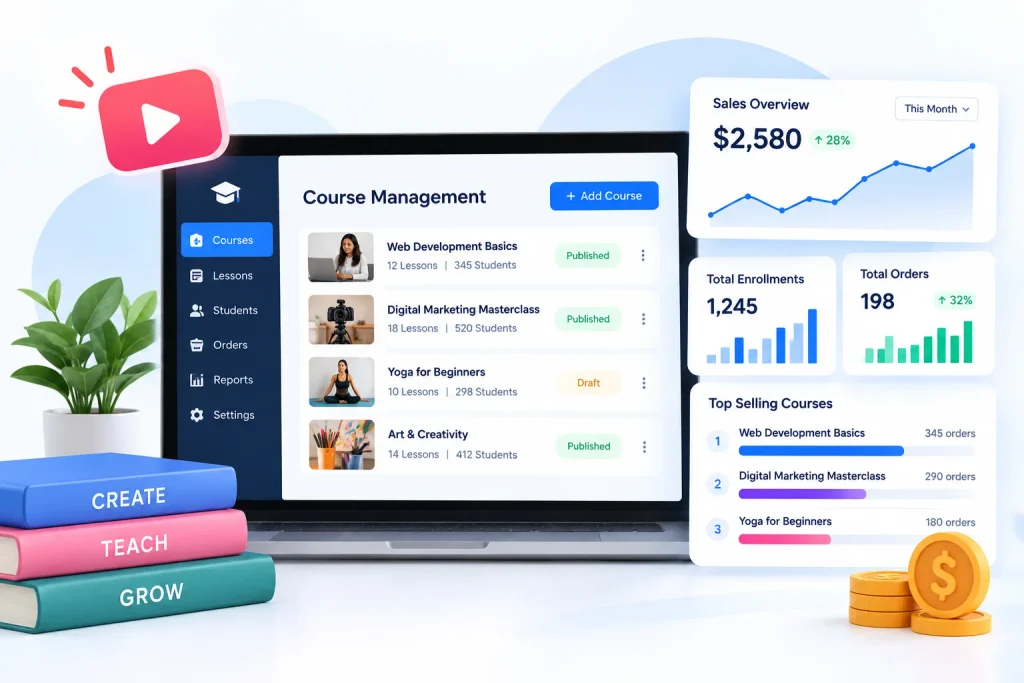
How to Build Your Online Course Website Using SocialEngine
If you want to create a branded learning website rather than build every learning feature from scratch, the SocialEngine Courses – Learning Management System Plugin is an option worth exploring.
Designed for SocialEngine websites, this plugin adds functionality for creating and managing online classrooms and courses.
It supports free and paid courses, text-based and externally linked video lectures, tests, course pricing and discounts, reviews and ratings, and course orders. PayPal and Stripe are listed as supported payment gateways. Feature availability and configuration depend on the installed version and your website setup.
Here is how you can use it to build your learning platform.
Step 1: Set Up Your Website
Start with a SocialEngine website that reflects your brand, target audience, and educational niche.
Choose a suitable domain name, establish your website’s design, and configure the essential pages that introduce your services and explain your learning offerings.
Step 2: Install the Courses LMS Plugin
Install and configure the SocialEngine Courses – Learning Management System Plugin on your compatible SocialEngine website.
The plugin’s administration settings allow you to configure course and classroom functionality and manage relevant permissions.
Step 3: Create Your Classrooms
Organize your educational content into classrooms that represent your subjects, services, or areas of expertise.
For example, a music teacher might create classrooms for guitar lessons, music theory, and beginner piano.
Step 4: Publish Your Courses
Add course titles, descriptions, categories, pricing, and other relevant information.
Create a clear course outline so learners can understand what they will learn before enrolling.
Step 5: Add Lectures and Tests
Build your course using text-based lessons and externally linked video tutorials. Where appropriate, add tests to assess learners’ understanding.
You can also configure supported lecture previews so prospective students can explore selected content before purchasing a course.
Step 6: Configure Payments and Course Pricing
Set your course prices, configure available discounts, and set up a supported payment gateway.
Review the complete purchase process before making your courses available to customers.
Step 7: Promote Your Courses
Share your course pages through social media, email marketing, educational communities, and other relevant marketing channels.
Publish useful free content, demonstrate your expertise, and give potential learners a clear reason to choose your courses.
Explore the SocialEngine Courses LMS Plugin to review its features and see how it can support your e-learning website.
How Can You Make Money from Your Online Course Website?
Creating a website is only the first step. Your business model should reflect the needs of your audience and the value of the knowledge you provide.
Here are some approaches you can consider.
Sell Individual Courses
Create a course around a specific subject or skill and charge learners a one-time price to access it.
This model can work well for exam preparation, software tutorials, art lessons, professional skills, and other focused topics.
Offer Free Courses Alongside Premium Courses
Provide selected lessons for free and offer more detailed courses as paid products.
This approach allows potential students to experience your teaching before deciding whether to purchase additional material.
Create Different Learning Categories
If you teach several related subjects, organize them into separate course categories or classrooms. This helps learners discover content that matches their interests and gives you room to expand your offerings.
Offer Discounts and Special Promotions
Use appropriate discounts or promotional offers to encourage enrollment during launches, seasonal campaigns, or other marketing activities.
Build a Recognizable Educational Brand
Share useful information consistently and develop trust with your audience. Over time, your website can become a destination for learners who want to explore your expertise and educational products.
Your actual earnings will depend on course quality, pricing, audience demand, marketing, payment costs, and other business expenses. There is no guaranteed income, but a well-planned website can provide a foundation for building an online education business.
Your Own Course Website vs. Relying Only on Third-Party Platforms
Third-party learning platforms can offer discovery opportunities and existing audiences. However, building your own website gives you another route to reach customers and present your courses under your own brand.
With your own website, you can focus on:
- Brand identity: Present your courses using your own website’s design and branding.
- Course organization: Structure your classrooms, categories, lectures, and assessments according to your teaching approach.
- Pricing flexibility: Configure course prices and supported discounts.
- Direct customer relationships: Build your own audience and communicate with learners through the features available on your website.
- Business expansion: Add new subjects and courses as your educational business develops.
The right choice depends on your goals. You can also use third-party channels for discovery while directing interested learners to your own branded learning platform where appropriate.

Start Building Your Online Learning Business
You do not have to be a large educational institution to create an online learning platform. Teachers, tutors, artists, consultants, and content creators can start with a focused subject, develop useful learning material, and expand their offerings as they understand their audience.
The key is to choose the right tools, create valuable courses, provide a good learning experience, and invest in reaching the people who need your knowledge.
If you already have a SocialEngine website or are planning to build one, the SocialEngine Courses – Learning Management System Plugin can help you introduce online classrooms, free and paid courses, lectures, tests, and course management functionality.
Ready to turn your expertise into an online learning platform?
Explore the SocialEngine Courses – Learning Management System Plugin, review the live demo, and discover how you can build a course website around your knowledge, your brand, and your business goals.