
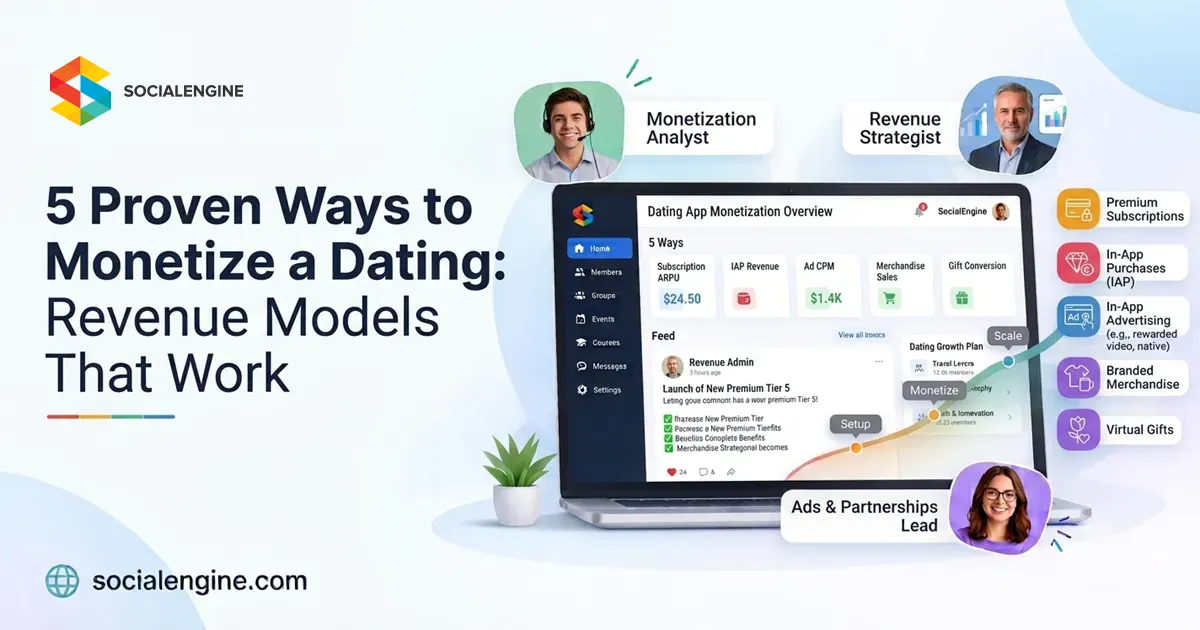
Building a dating app is only the first step. The bigger business question is how the platform will generate sustainable revenue without making the experience frustrating for users looking for meaningful connections.
Current dating app monetization strategies commonly focus on several core models: subscriptions, one-time purchases, advertising, premium memberships, and combinations of these approaches.
The key is not to monetize every feature. Instead, identify the moments when users see enough value to pay for an enhanced experience.
1. Freemium + Premium Subscriptions
The freemium model lets users create a profile, discover other members, and experience the core dating journey for free. Premium subscriptions then unlock additional capabilities.
Common premium features include:
- Advanced search and matching filters
- Increased or unlimited likes
- Seeing who liked your profile
- Profile visibility boosts
- Additional discovery preferences
- Enhanced matching features
Subscriptions can be an effective monetization model for dating platforms, particularly when premium features focus on discovery, visibility, filtering, and matching.
How to Implement It
Don’t make the free version feel unusable.
Instead, let users understand the value of your platform first. Then introduce premium features that make discovery easier, increase visibility, or give users more control over their experience.
Monthly and longer-term plans can give users different commitment options while creating recurring revenue for the platform.
2. One-Time In-App Purchases
Not everyone wants another monthly subscription.
That’s where one-time purchases can work well. Users can pay when they want a particular feature without committing to recurring payments.
Examples include:
- Profile boosts
- Super likes
- Extra swipes
- Virtual gifts
- Temporary visibility upgrades
- Additional discovery options
One-time purchases can give dating platforms another way to monetize free users through optional, pay-as-you-use features.
How to Implement It
Keep the value obvious.
If someone purchases a profile boost, explain what it does and how long it lasts. If you’re selling additional likes, make the benefit immediately understandable.
The purchase should feel like an optional upgrade, not an obstacle between the user and the core dating experience.
3. Advertising and Sponsored Placements
Advertising can monetize users who never become paying subscribers.
Potential options include:
- Native advertising
- Sponsored profiles
- Sponsored listings
- Brand partnerships
- Sponsored events
- Promotional placements
Advertising can provide an additional revenue stream for dating platforms, particularly once the community has a large and active user base.
How to Implement It
Be careful with placement.
Dating is a trust-sensitive experience, so aggressive advertising can quickly make the platform feel cluttered.
Keep sponsored content clearly identified and avoid interrupting important interactions such as matching, messaging, or profile discovery.
Monitor whether advertising affects engagement, retention, and the overall user experience.
4. VIP Memberships and Premium Tiers
Instead of offering only one premium plan, you can create multiple membership levels for different types of users.
For example:
Free
Core profile and discovery features.
Plus
Additional discovery and communication capabilities.
Premium
Advanced filters, visibility tools, and expanded access.
VIP
Higher-value features or exclusive experiences.
VIP memberships can provide additional value to highly engaged users who want enhanced visibility, discovery, communication, or exclusive features.
How to Implement It
Each tier should have a clear reason to exist.
Don’t create four plans that are almost identical. Instead, organize them around different levels of value and user needs.
A user should be able to understand within seconds:
What do I get?
Who is this plan for?
Why would I upgrade?
Clear differences between plans make the pricing structure easier to understand and compare.
5. Hybrid Monetization
Why depend on only one revenue stream?
A dating platform can combine several monetization models:
Free access → Premium subscription → Optional boosts → Sponsored opportunities
Some users may become subscribers. Others may purchase a boost occasionally. Some may remain free users while contributing to advertising revenue.
A hybrid approach allows a dating platform to serve different user segments while creating multiple sources of revenue.
How to Implement It
Start with one primary revenue model.
Once you understand user behavior, introduce additional revenue streams where they make sense.
Track metrics such as:
- Free-to-paid conversion
- Revenue per paying user
- Subscription retention
- Churn
- Purchase frequency
- Refunds
- User engagement
- Lifetime value
These metrics provide a much clearer picture of your monetization performance than simply looking at total revenue.
How to Choose the Right Dating App Revenue Model
Before putting a feature behind a paywall, ask:
- What creates the clearest value for users?
- Which users are most likely to pay?
- Is the benefit recurring or occasional?
- Will monetization interrupt the dating experience?
- Can the model scale without hurting retention?
For many dating platforms, subscriptions can provide a recurring revenue foundation, while one-time purchases give users more flexibility.
Advertising can monetize the free audience, while premium tiers can target users who want additional functionality.
There isn’t necessarily one model that needs to do everything. A combination of carefully selected revenue streams can work better when each one serves a clear purpose.
Build Monetization Into the Dating Platform
Revenue shouldn’t be an afterthought.
Your dating platform needs a solid user experience first, including profiles, discovery, matching, messaging, notifications, privacy, moderation, and mobile usability.
SocialEngine can provide the foundation for creating a branded social community that can be adapted around a specific audience and business model.
Its broader community capabilities include member profiles, social interactions, groups, messaging, events, content, memberships, and monetization features.
If you’re planning a dating-focused community, the objective doesn’t have to be simply copying an existing dating app. You can build around your own niche, audience, positioning, branding, and monetization strategy.
Final Thoughts
A successful dating app monetization strategy isn’t about charging users at every opportunity.
It’s about finding the points where a paid feature genuinely improves the experience.
Subscriptions can create recurring revenue.
One-time purchases can monetize occasional user intent.
Advertising can generate revenue from free users.
VIP memberships can serve users looking for additional value.
Hybrid models can bring several approaches together.
Start with your user journey. Decide what people will value enough to pay for. Then measure the results and refine your model as the dating community grows.
FAQs
Subscriptions are one of the major dating app revenue models and can be combined with one-time purchases or other revenue streams.
Free dating apps can generate revenue through premium subscriptions, one-time purchases, advertising, sponsored placements, VIP memberships, or a combination of these models.
Common paid features include profile boosts, advanced filters, additional likes, visibility tools, premium discovery, and enhanced matching or communication capabilities.
It can. A hybrid strategy allows different user segments to pay in different ways. However, every revenue stream should have a clear purpose and should be measured against engagement, retention, and the overall user experience.