

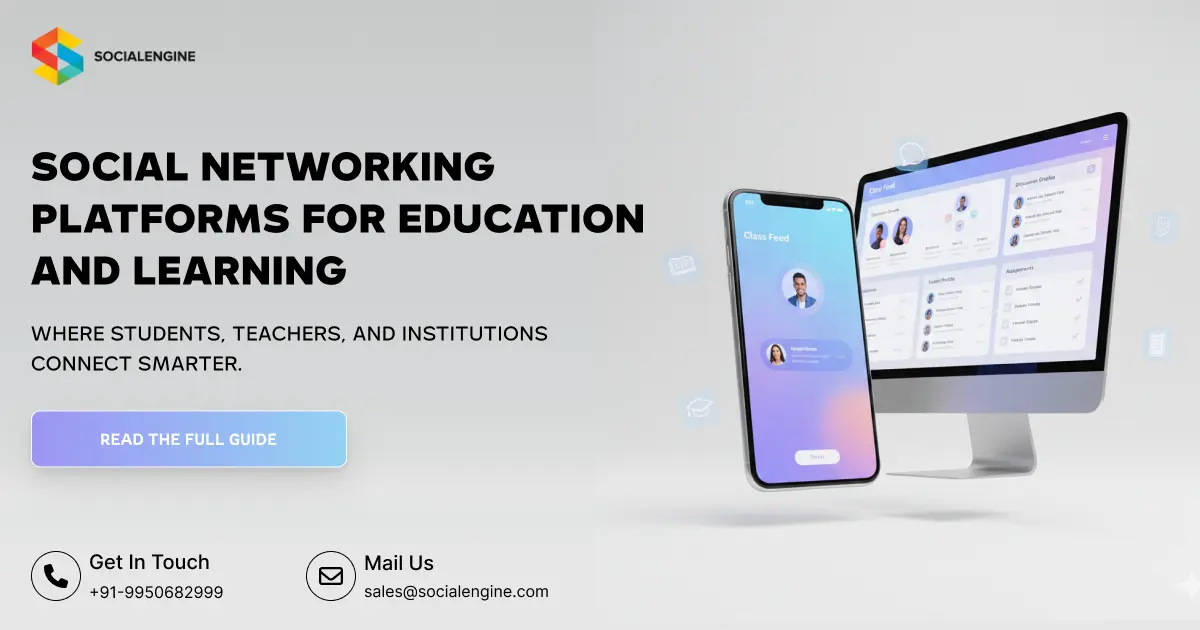
Learning can now be done at any time and in any place. One way education has evolved is through the advent of social networking platforms, enabling learners, teachers, and student. They share their ideas, resources, and perspectives more quickly.
By using social networking platforms in education, we are transforming the educational experience into one that is more interactive and available in ‘real time’. This form of learning presents an accessible and memorable experience. The opportunity to build communities around shared interests and goals.
You can be an educator looking to support a more engaged student or a learner. Looking for connected and supportive learning communities. Social networking platforms have tools to help make education connected and meaningful.
The Requirements for Social Networking in Education
With traditional learning methods, opportunities for collaboration and interaction are typically limited to a certain set of physical locations for the learner. As students learn primarily inside isolated classrooms, it can be slow or difficult to communicate outside. Social networking platforms address the limitations of hybrid and online learning by allowing for a time and location for learners and educators to connect freely.
Students could ask questions and share ideas with teachers and educators, which allows for real-time collaboration. Teachers or educational licensees could offer instant feedback when students share a project, share resources, and provide timely feedback on each student.
Furthermore, online or hybrid learning participants often lose that community feel; social networking allows them to locate that community and feel less isolated. When everyone is in a connected space, educators create a better learning opportunity that is more efficient, effective, and equitable.
Key Characteristics of Educational and Learning Social Networks
Educational social networking sites facilitate learning with a range of unique applications and services:
- User Profiles & Roles: Students, teachers, advocates, and administrative roles represent different levels of user and access that can be scaled.
- Discussion Boards & Forums: Students and learners can inquire and reflect collaboratively through group discussions and sharing ideas.
- Share Content: Users may upload their assignments, live videos, presentations, and other learning materials.
- Live Session & Webinars: Teachers and subject matter experts can provide classes or workshops in real-time online.
- Gamification & Badging: Students will be kept engaged by way of rewards, points, and achievements.
- Privacy & Safety Features: The platform provides secure login, restricted access, and monitoring to create a safe learning environment.
These features allow for an engaging, collaborative environment and promote an ordered academic experience for students and teachers.
For a fully integrated social network experience that supports SEO growth, consider adding the Photo Album Plugin, Video Sharing Plugin, and Polls Plugin to give users more ways to contribute content.”
Popular Social Networks for Learning
Many social platforms have been developed to make learning more interactive and connected. Some of the more popular options are:
- Edmodo: Edmodo acts as a safe platform for teachers and students to pass or discuss assignments and other learning materials.
- Google Classroom: Easier due to Google Suite products to distribute and grade assignments and communicate with students.
- Schoology: It can provide course management and collaboration features, and provides analytics of students’ progress.
- Moodle: This is an open-source and completely free software that offers an online course and an online collaborative learning community.
- Niche Learning Communities- These are platforms that focus on specific subject areas, skills, or professional communities. These are platforms that support engaging students and having focused discussions and resource sites.
All platforms have specific features but have commonalities. These seek to create a rich, engaging student collaborative opportunity to interact with the educator as well as peers.
See practical strategies for increasing engagement and interaction in: 5 Ways to Personalize the User Experience on Your Social Network.
Advantages for Students
Educative social networking platforms have the following benefits to students:
- Greater Engagement: Students are able to participate and get more from their studies through moderation and active participation in set forums and polls. The attendance of live lessons with supplementary quizzes supports this.
- Fast Study Material Retrieval: Expedient and time-saving access to studies and retrieval is made possible. Be it videos, notes, or any other study material.
- Collaboration and Networking: Children are able to work on group tasks either as projects or assignments. With immediate sharing of constructive critique with their peers and the establishment of friendships.
- Tailored Education: Students may, and usually do, customize the blend of study and hobbies by concentrating on their comfort zones. They move ahead at their own speed.
This range of benefits helps students stay motivated and understand concepts more effectively. It also helps them feel valued and grow within a supportive group.
For advanced social networking strategies and features, explore: The Future of Social Networking: Emerging Trends and Technologies in 2026.
Conclusion
Online social networking services are transforming education by enabling easy interaction, collaboration, and instant feedback. They connect learners and instructors through tools for group discussions and resource sharing, making learning more dynamic than traditional classrooms.
By using these platforms, educators can build strong learning communities that boost teamwork and support continuous learning. Whether you’re a student, teacher, or lifelong learner, social networking makes education more connected and meaningful.
🚀 Try SocialEngine CMS today – the most powerful platform to create your own custom community site.
👉 Launch Your Social Network Now